WHAT YOU NEED TO KNOW
- USS Theodore Roosevelt departed San Diego for a deployment expected to exceed seven months and take the carrier to the Middle East.
- The carrier is expected to relieve USS George Washington as the Navy sustains its regional presence during the Iran war.
- An Iranian missile attack in the Strait of Hormuz injured eight Marines aboard a vessel that was not a Navy ship.
- CENTCOM says the strait remains open, while U.S. forces enforce a blockade and facilitate crude oil movements.
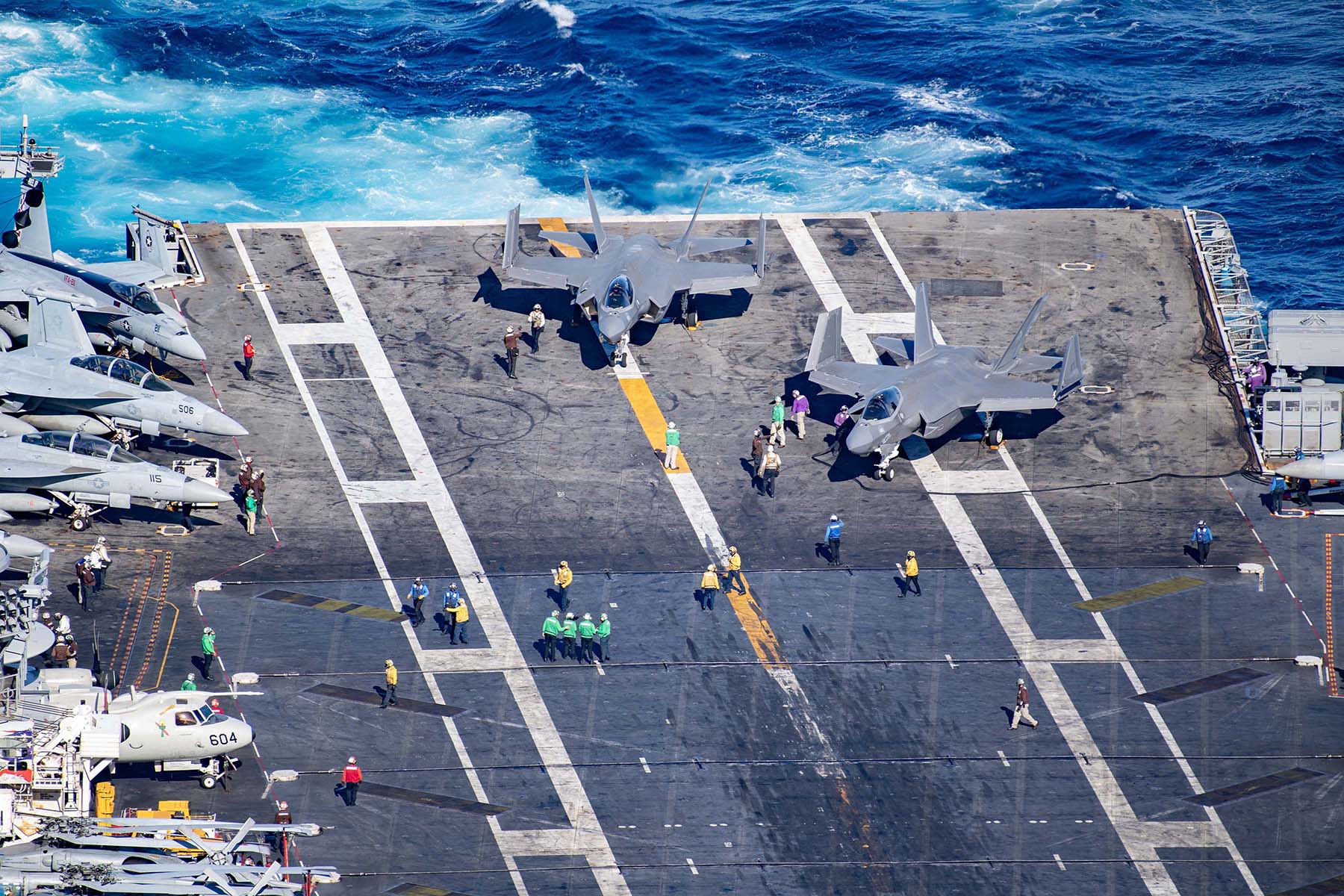
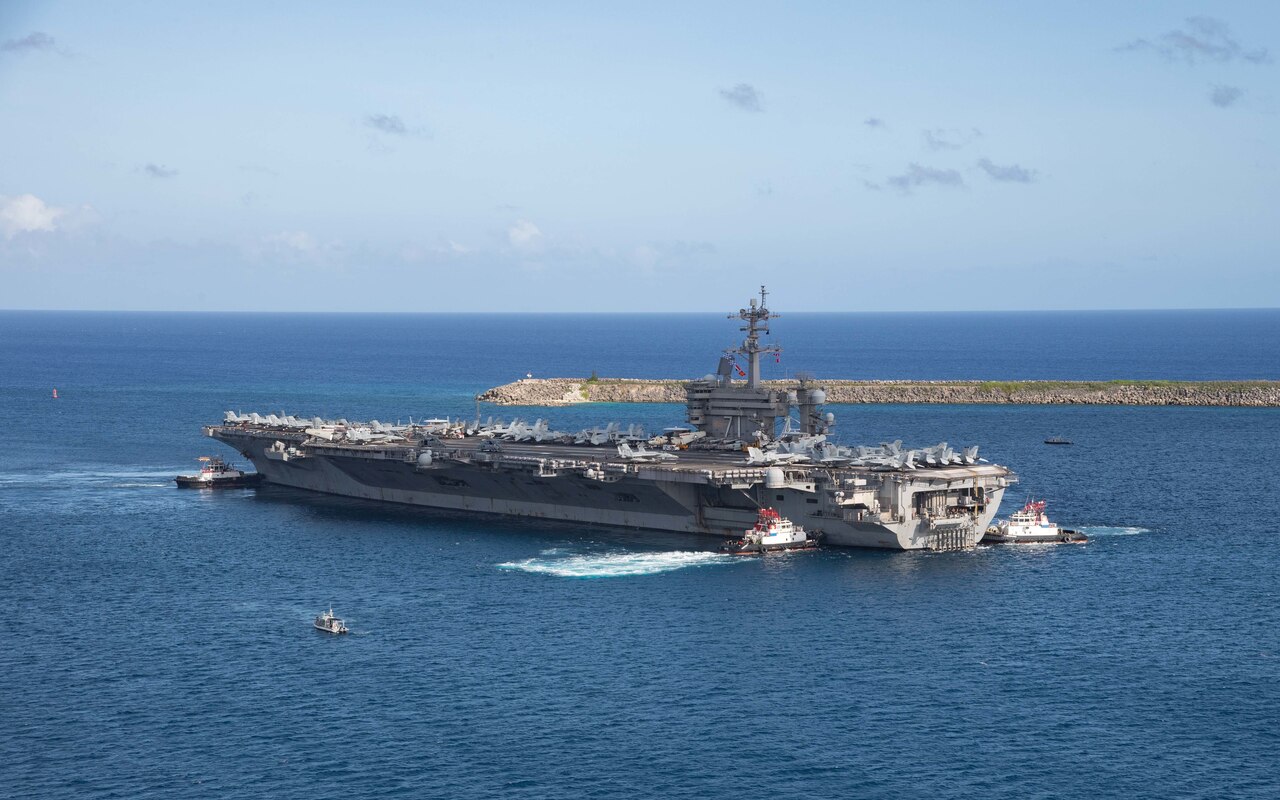
The aircraft carrier USS Theodore Roosevelt departed San Diego on Sunday for a deployment expected to last more than seven months.
The Navy is preparing to sustain its Middle East presence as the war with Iran continues.
Roosevelt is expected to relieve the Japan based aircraft carrier USS George Washington.
Washington was sent to the region last month following reports of mental health concerns, including suicide attempts, aboard USS Abraham Lincoln.
The Navy did not immediately answer questions about Roosevelt. The San Diego Union Tribune and the online ship watcher @WarshipCam first reported the carrier’s departure.
The deployment began as new details surfaced about an Iranian missile attack that injured eight Marines in the Strait of Hormuz earlier this month.
NBC News reported Monday that the Sept. 14 attack involved an Iranian cruise missile targeting ships.
The unidentified vessel was transiting the strait when it was attacked, according to the report. NBC News said the vessel was not a Navy ship.
The Marines suffered smoke inhalation and potentially traumatic brain injuries, according to NBC News, which cited three unidentified U.S. officials.
They were operating as part of a battalion landing team at the time.

The officials did not make clear what mission the Marines were performing aboard the vessel. The Pentagon also did not disclose the injuries when the attack occurred.
MORE NEWS: Texas Attorney Goes Viral After Judge Allegedly Humiliates Her Over ‘Inappropriate’ Dress [WATCH]
The injuries were added Wednesday to an online casualty database, according to the report.
So far, 19 service members have died and 861 have been wounded in action during the Iran war, which began in late February.
U.S. Central Command did not immediately respond Monday to an email seeking confirmation of the NBC News report.
The casualties emerged as the United States works to increase oil movements through the strait and enforce a maritime blockade against Iranian ports.
CENTCOM said Wednesday that its forces had redirected 115 commercial ships as part of the blockade.
U.S. forces also have facilitated the movement of more than 1 billion barrels of crude oil through the strait over the past couple of months.
Adm. Brad Cooper, the CENTCOM commander, provided that oil transit figure on Sept. 19. The exact methods U.S. forces are using to keep oil moving, including the nature of any coordinated protection, remain unclear.
Analysts told Stars and Stripes earlier this month that U.S. helicopters, fighter jets and surface drones likely are protecting tankers from Iranian drones and missiles. The tankers have been traveling through the strait in nighttime convoys.
The aircraft carrier USS George H.W. Bush also is operating in the Arabian Sea alongside Washington.
Those carriers are among approximately 15 Navy ships in the sea, including the Boxer Amphibious Ready Group, according to the latest USNI News fleet tracker.
Four Navy destroyers and a cruiser are operating in the Indian Ocean, according to the USNI report.
Six additional warships are positioned in the Red Sea and the eastern Mediterranean Sea.
President Donald Trump announced Saturday that he was rejecting an Iranian cease fire proposal that would have reopened the strait and resumed peace talks with Tehran. Trump later said he expected talks with Iran to resume during the week.
Indirect talks were anticipated as soon as Monday, Axios reported. Despite Trump’s public rejection of the proposal, the Iranian foreign minister said Sunday that Iran was still waiting for an official U.S. response, according to The New York Times.
MORE NEWS: Florida Socialist Senate Candidate Smears ‘Stop Woke’ as Racist Code Against Black People [WATCH]
The Joint Maritime Information Center, which is led by the United States, said Sunday that no attacks or shipping disruptions had been confirmed in the Persian Gulf, Strait of Hormuz or Gulf of Oman during the previous 72 hours.
CENTCOM also rejected claims Monday that Iran had gained full control of the Strait of Hormuz.
The command said the waterway remained open, pointing to the thousands of ships that had traveled through it over the previous several months.
The opinions expressed by contributors and/or content partners are their own and do not necessarily reflect the views of Conservative Mix. Contact us for guidelines on submitting your own commentary.
Leave a comment
COMMENTS POLICY: We have no tolerance for messages of violence, racism, vulgarity, obscenity or other such discourteous behavior. Thank you for contributing to a respectful and useful online dialogue.